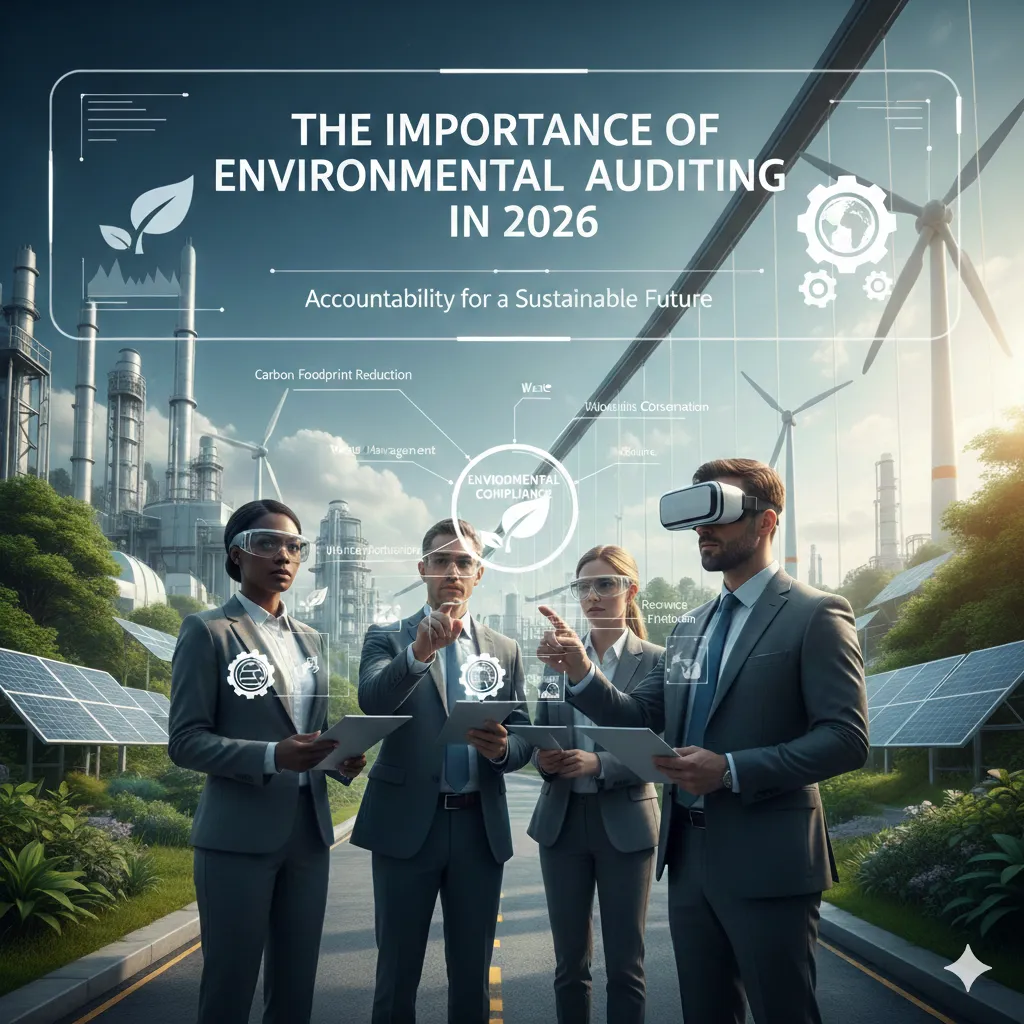
The Importance of Environmental Auditing in 2026
The Importance of Environmental Auditing in 2026
Introduction
Climate change and environmental challenges are no longer distant concerns—they affect us all, including Pakistan. Industries, businesses, and organizations are realizing the importance of understanding their environmental impact and adopting sustainable practices.
This is where Environmental Auditing comes in. It’s a vital process that helps companies assess their operations, emissions, and resource usage in a transparent and structured way.
Environmental audits don’t just ensure compliance—they also improve efficiency, enhance reputation, and support long-term sustainability.
What is Environmental Auditing?
Environmental auditing is a systematic process where a company’s environmental performance is evaluated. It looks at:
How resources like energy, water, and raw materials are being used
Waste management practices
Greenhouse gas emissions
Compliance with national and international environmental regulations
Risks and opportunities for improvement
The goal isn’t to find faults it’s to promote continuous improvement and make operations more sustainable.
Relevant Standards:
ISO 14001 – Environmental Management System
ISO 14064 – Greenhouse Gas (GHG) Verification
ISO 14065 – Accreditation of Verification Bodies
These standards guide organizations on how to perform credible, transparent audits.
Why Environmental Auditing Matters in 2026
Regulatory Compliance
By 2026, Pakistan and the global community are adopting stricter environmental regulations. Regular audits help companies stay compliant and avoid penalties.
Enhancing Reputation
Businesses that take environmental responsibility seriously earn trust and improve their brand image. Audits ensure that sustainability claims are verified and credible.
Cost Savings
Environmental audits highlight opportunities to optimize energy, water, and material usage, which helps reduce operational costs.
Reducing Carbon Footprint
Audits track greenhouse gas emissions, allowing companies to implement strategies to lower their carbon footprint effectively.
Building Stakeholder Confidence
Investors, clients, and partners prefer environmentally responsible companies. Certified environmental audits build trust and attract future opportunities.
How Environmental Auditing Works
Planning & Scope Definition – Decide which operations, sites, and processes will be included.
Data Collection – Gather data on energy use, emissions, waste, and other environmental factors.
Evaluation & Reporting – Assess the collected data against standards and prepare a detailed report.
Recommendations & Action – Suggest corrective actions and improvement plans.
Follow-up & Verification – Monitor progress and verify that the recommended changes are implemented.
GITCHIA Institute’s Role
GITCHIA Institute of Global Certification provides expert environmental auditing and training services:
ISO 14001 & ISO 14064 certifications
Training programs for auditors and organizations
Guidance to help companies stay compliant, improve sustainability, and gain international recognition
With GITCHIA’s expertise, organizations can ensure their environmental efforts are measurable, credible, and impactful.
Conclusion
Environmental auditing in 2026 isn’t just a regulatory requirement—it’s a strategic tool for cost savings, sustainability, and business growth. Companies in Pakistan that want to stay competitive globally must embrace environmental audits.
GITCHIA Institute can help organizations reduce their environmental impact while implementing sustainable business practices successfully.
Call to Action:
🌱 Want to make your business sustainable and compliant?
Join GITCHIA Institute’s Environmental Auditing Training Program today!