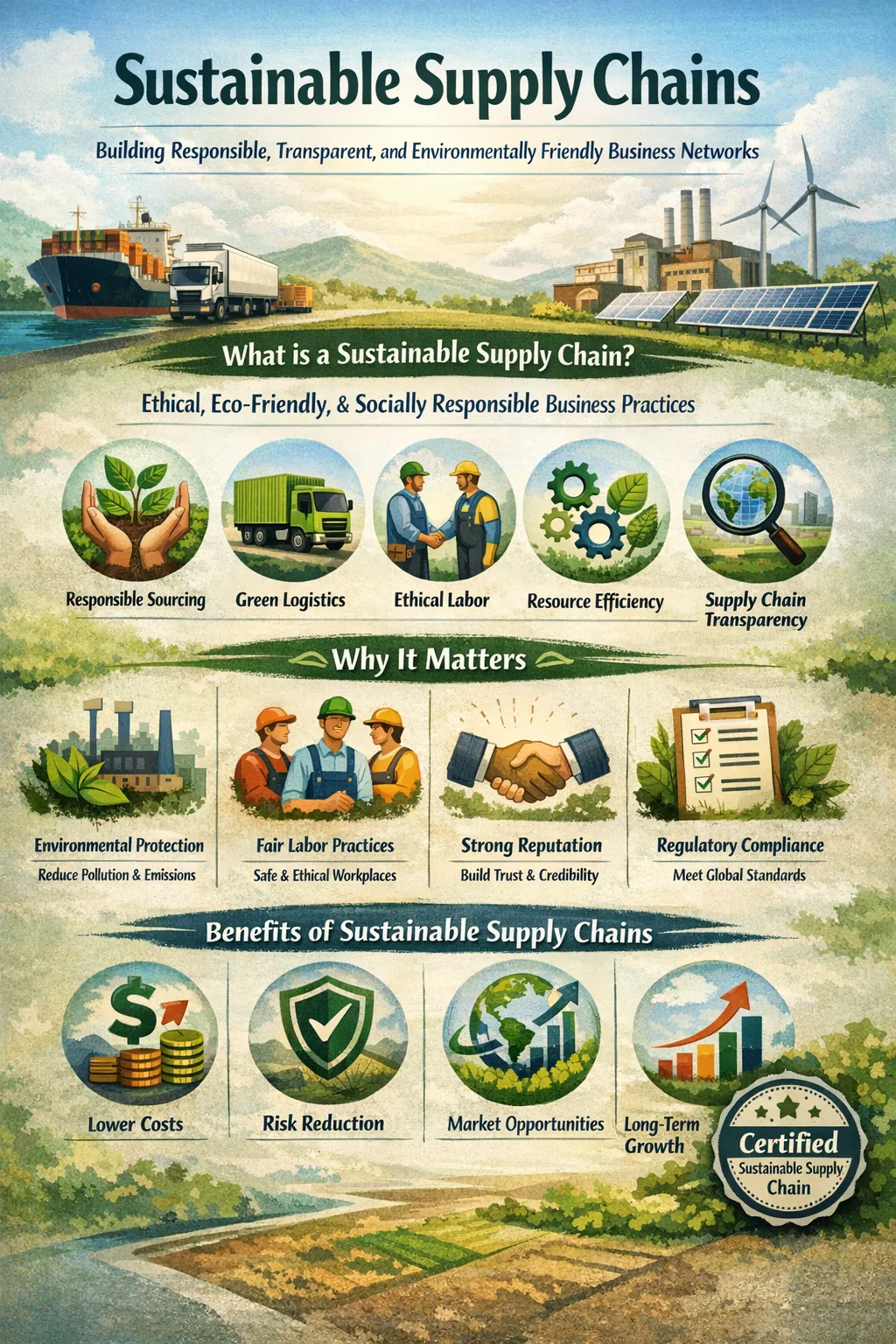
Sustainable Supply Chains
Sustainable Supply Chains
Building Responsible, Transparent, and Environmentally Friendly Business Networks
In today’s global economy, businesses are no longer judged only by the products they sell but also by how those products are produced and delivered. Consumers, regulators, and international partners increasingly expect companies to operate responsibly and minimize their environmental and social impact.
A Sustainable Supply Chain ensures that every stage of a product’s journey from raw materials to manufacturing, transportation, and final delivery follows ethical, environmentally responsible, and socially fair practices.
For organizations aiming to compete globally, sustainable supply chains are becoming a key business strategy rather than just an environmental initiative.
What Is a Sustainable Supply Chain?
A sustainable supply chain integrates environmental, social, and economic considerations into supply chain operations. This means companies evaluate not only the cost and efficiency of their suppliers but also their environmental practices, labor conditions, and resource usage.
It focuses on responsible management of resources while maintaining efficiency and profitability.
Key aspects include:
Environmentally responsible sourcing
Ethical labor practices
Efficient use of energy and materials
Reduced carbon footprint
Transparent and traceable supply chains
In simple terms, sustainable supply chains ensure that products are created and delivered without harming people or the planet.
Why Sustainable Supply Chains Are Important
Modern consumers and businesses are more conscious about where products come from and how they are produced. As a result, sustainability is becoming a major factor in purchasing decisions and international trade requirements.
Environmental Protection
Sustainable supply chains reduce pollution, waste, and greenhouse gas emissions through efficient resource management.
Ethical Business Practices
They ensure fair labor conditions, safe workplaces, and respect for workers’ rights throughout the supply chain.
Business Reputation
Companies that adopt sustainability practices build stronger brand trust and credibility with customers and partners.
Regulatory Compliance
Many countries are introducing environmental and supply chain transparency regulations that businesses must follow.
Long-Term Business Growth
Sustainable operations help organizations reduce risks and maintain long-term stability.
Key Elements of a Sustainable Supply Chain
🌱 Responsible Sourcing
Companies prioritize suppliers that follow ethical and environmentally friendly production methods.
♻ Resource Efficiency
Businesses aim to reduce waste, improve recycling, and optimize energy and water usage.
🚚 Green Logistics
Transportation and distribution systems are optimized to reduce fuel consumption and emissions.
👷 Social Responsibility
Organizations ensure fair wages, safe working conditions, and respect for human rights across their supply chain.
🔍 Supply Chain Transparency
Businesses track and verify where raw materials come from and how products are manufactured.
Benefits of Sustainable Supply Chains for Businesses
Adopting sustainable supply chain practices offers multiple advantages:
Improved brand reputation Customers trust companies that care about sustainability.
Increased efficiency Efficient use of resources lowers operational costs.
Better risk management Ethical sourcing reduces reputational and legal risks.
Access to global markets Many international buyers prefer suppliers with sustainable practices.
Compliance with global standards Sustainability aligns with international frameworks such as environmental and social governance (ESG).
The Role of Certifications in Sustainable Supply Chains
Certifications and international standards play an important role in ensuring sustainable supply chain practices. These frameworks help organizations implement structured systems for monitoring and improving their operations.
Examples include standards related to:
Environmental management
Responsible sourcing
Food safety
Quality management
Sustainability certifications for agricultural products
Training and certification programs offered by institutions such as Gitchia Institute Of Global Certifications help professionals and organizations understand these standards and implement them effectively.
Challenges in Implementing Sustainable Supply Chains
Despite the benefits, businesses may face certain challenges when transitioning to sustainable practices
Limited visibility across complex supply chains
Higher initial investment in sustainable technologies
Supplier resistance to change
Lack of sustainability knowledge or expertise
However, with proper planning, education, and certification programs, organizations can gradually overcome these challenges.
The Future of Sustainable Supply Chains
Sustainability is becoming a central pillar of modern business strategy. Governments, investors, and consumers are increasingly pushing organizations toward responsible operations.
Technologies such as blockchain, artificial intelligence, and digital tracking systems are helping companies monitor supply chains and ensure transparency.
Businesses that adopt sustainable supply chain practices today will be better prepared for future regulations, market expectations, and environmental challenges.
Final Thoughts
Sustainable supply chains represent a shift toward responsible business practices that balance profitability with environmental and social responsibility. By integrating sustainability into sourcing, manufacturing, and logistics, organizations can reduce risks, improve efficiency, and strengthen their reputation.
As sustainability continues to shape global markets, businesses that prioritize responsible supply chains will be better positioned for long-term growth and global competitiveness.